How to compose your own botanical tobacco substitute
12 mai 2026
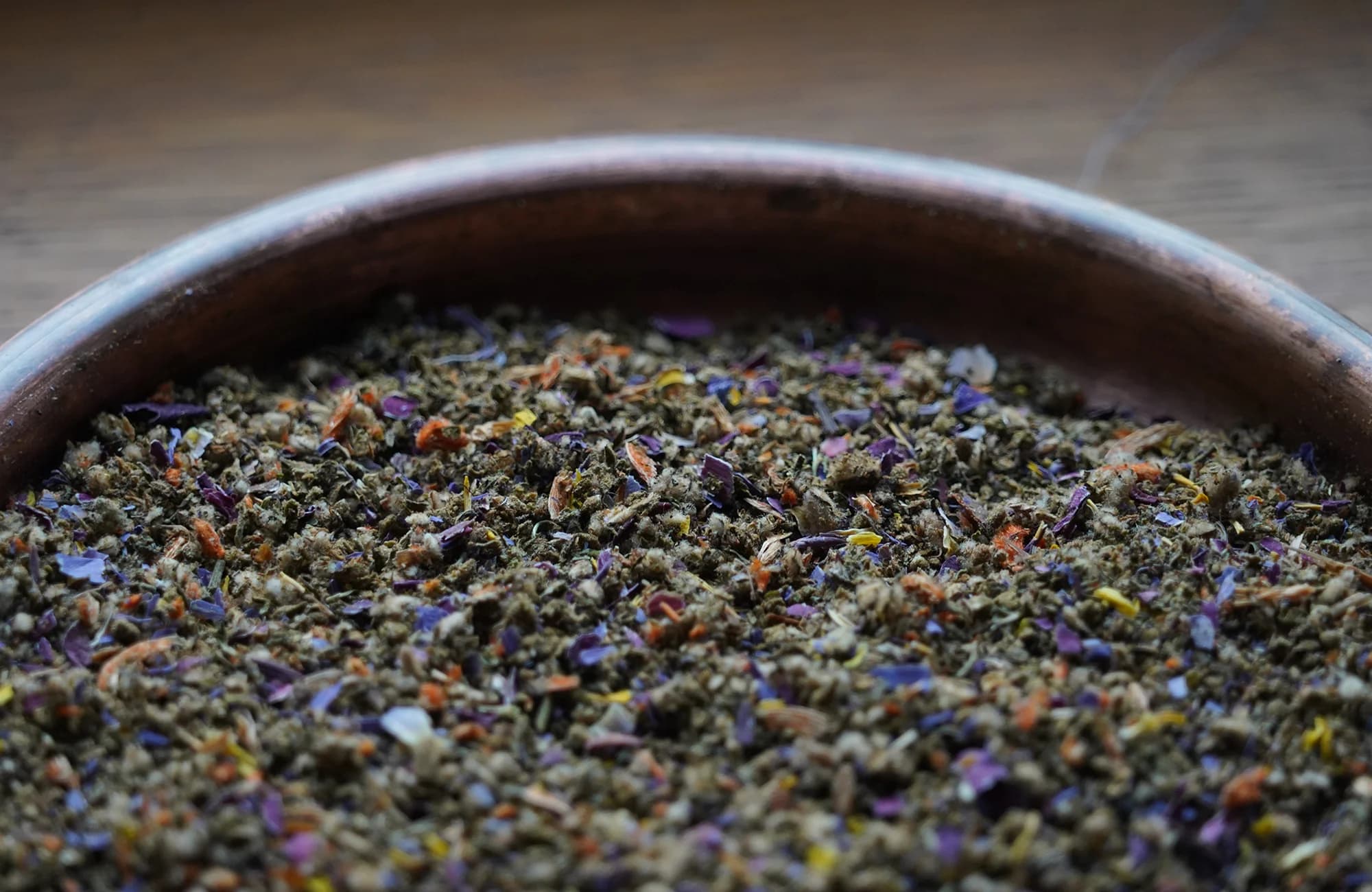
When you first look at a botanical recipe, the composition can seem fairly mysterious. In reality, most blends can be understood through a relatively simple structure: a leafy base that provides the body of the recipe, one plant or a small group of plants that gives it its character, followed by a few aromatic accents used with restraint to shape the final profile.
This way of thinking is much more useful than trying to include as many ingredients as possible. An interesting botanical composition does not necessarily come from complexity, but from the way each plant finds its place among the others.
This notebook focuses on botanical composition and the aromatic characteristics of plant blends. It is neither medical advice nor a smoking cessation method. Burning plant material produces substances that are undesirable for the respiratory system: the absence of tobacco or nicotine does not mean absence of risk.
The base: building the structure of the blend
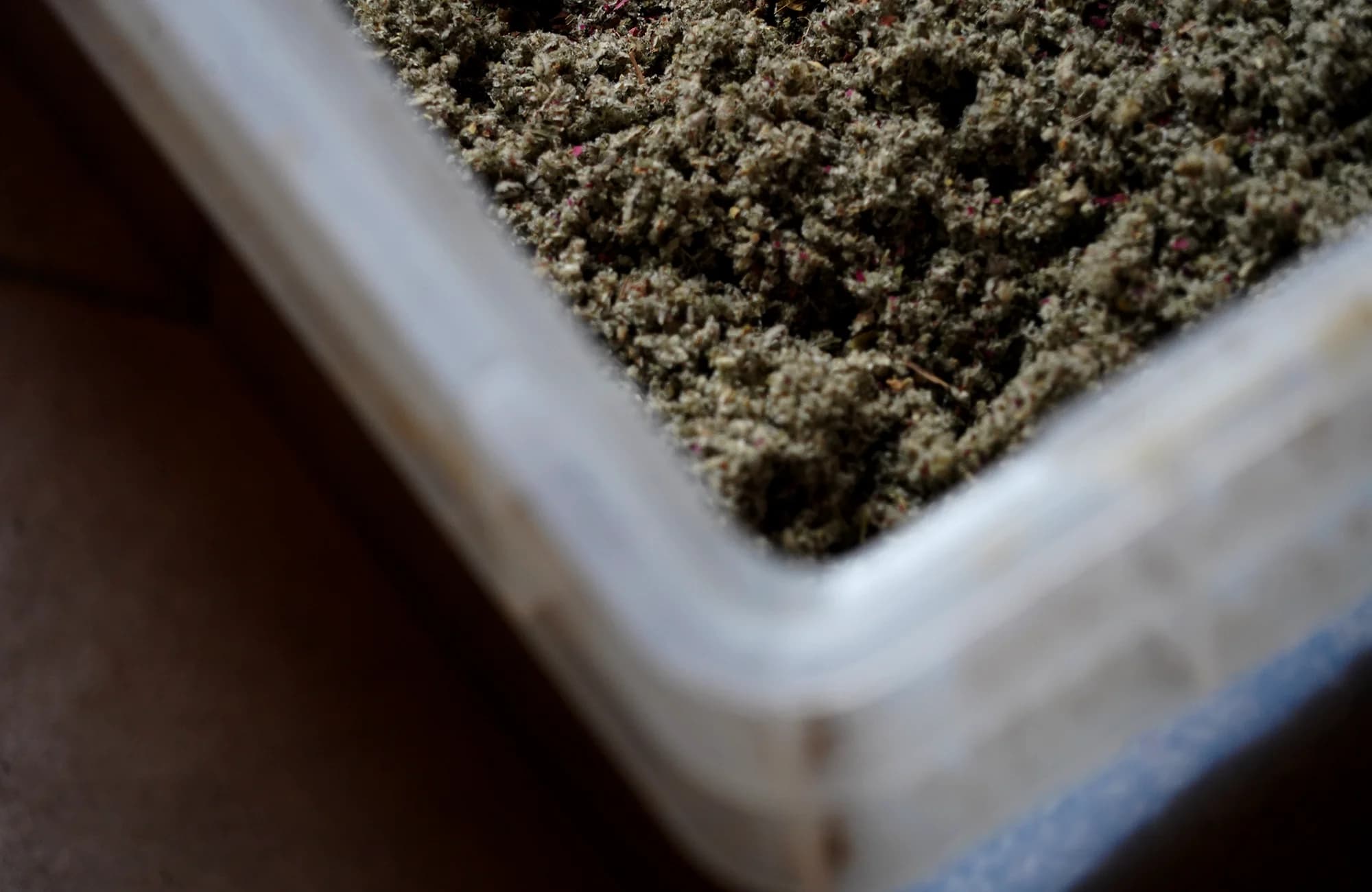
The first layer of a recipe is usually made from relatively neutral leaves. They often represent a significant proportion of the composition and mainly provide structure without immediately imposing a powerful aroma.
Mullein and raspberry leaf are good examples of this role. Mullein has a relatively discreet vegetal character, while raspberry leaf gives a somewhat fuller leafy presence. They can be used separately or together depending on the profile you are trying to create.
A good base should already feel coherent before more expressive ingredients are added. If it feels too dense, overly aromatic or badly balanced, adding flowers and stronger plants later will usually hide the problem rather than solve it.
The botanical heart: giving the recipe direction
Once the structure is in place, you can introduce the plant that will give the blend most of its personality. We prefer to describe this as the botanical heart or character plant. Its role is not to promise a particular “effect”, but to bring a distinctive botanical world, aroma and identity to the composition.
Damiana, blue lotus and Wild Dagga can all occupy this role, each in a very different register. Their botanical character, aroma and interaction with the base can transform the overall recipe.
This is also the stage where it helps to resist adding too many things at once. One central plant chosen well can often create more coherence than several ingredients all competing for attention.
Aromatic accents: work in small proportions
The final layer is formed by the most aromatic plants. Mint, rose petals, lavender and other flowers can alter a recipe significantly even when used in relatively small quantities.
They work much like seasoning in cooking. Their role is not necessarily to become the main ingredient, but to introduce a nuance, reinforce a direction or create contrast with the rest of the composition.
Mint is a good example: a small increase can shift a mostly vegetal blend towards something noticeably fresher. Lavender can be even more dominant. Starting cautiously is therefore much easier than trying to rescue a recipe after an aromatic plant has taken over the entire composition.
Think in roles rather than ingredients
A simple way to compose is to ask what each plant is actually meant to do. The base builds the body of the mixture. The botanical heart gives it personality. Aromatic accents then refine the final profile.
This logic helps avoid one of the most common mistakes in home blending: adding a plant simply because it sounds interesting on its own. Two excellent ingredients do not necessarily work well together, and a recipe has no obligation to include every botanical in the cupboard.
If a plant does not have a clear role in the composition, it can be useful to make a second version without it and compare. Very often, simplifying a recipe makes it easier to understand.
Proportions change everything
Two compositions using exactly the same plants can have completely different personalities. A slightly larger proportion of the base will make the recipe more neutral, while a modest increase in the central plant can change the balance entirely.
These variations are where the process becomes interesting. Instead of searching immediately for the “perfect recipe”, it is often more useful to make several small variations and compare them. Over time, you begin to understand how each plant behaves alongside the others.
At Shiva Blends, much of the formulation work happens precisely here: not in the search for another spectacular ingredient, but in adjusting what is already in the recipe.
Let the blend rest before judging it
When you spend a long time working with several aromatic plants, your senses gradually become less precise. A recipe that seems obvious after twenty minutes of blending may feel quite different when you return to it later with a fresh perspective.
Taking a break and comparing your trials again can make it much easier to notice what was invisible before: a flower that is too dominant, a base that has become too weak, or an ingredient that ultimately contributes very little.
Keeping notes is also invaluable. The best improvised blend has an unfortunate tendency to become impossible to reproduce when nobody remembers exactly what was changed.
Choose plants seriously
The fact that something is natural does not automatically make it suitable for every use. Plants contain their own compounds, may have specific precautions and can sometimes interact with medication or be unsuitable for certain people.
It is therefore important to work only with correctly identified plants of known origin and to understand the precautions associated with each material. A plant that has traditionally been used in one context should not automatically be transferred to another simply because it is botanical.
This caution is part of botanical work itself. At Shiva Blends, choosing an ingredient is never based only on its history or aroma. Its quality, identity, traceability and known precautions also matter.
A good recipe does not need to do too much
At its core, the structure is simple: a coherent leafy base, a plant that gives the recipe its direction, and a few aromatic accents used with restraint.
From there, however, the possibilities become enormous. Changing the base changes the way the central plant is perceived. Adding a fresh note can completely shift the composition. Removing one ingredient can sometimes reveal the recipe far more effectively than adding another.
This is probably what we enjoy most about botanical blending. You begin with a handful of relatively simple plants, then, through small adjustments, the composition gradually develops a personality of its own. That moment feels less like following a formula and more like discovering what the recipe was trying to become.
For adults aged 18 or over. This information relates to botanical composition and does not constitute medical or therapeutic advice. Some plants may have contraindications or interact with medication.
Want to go further?
Notes on a few plants · the discovery pack · find your blend in 30 seconds