Inside the Shiva Blends workshop
30 mars 2026
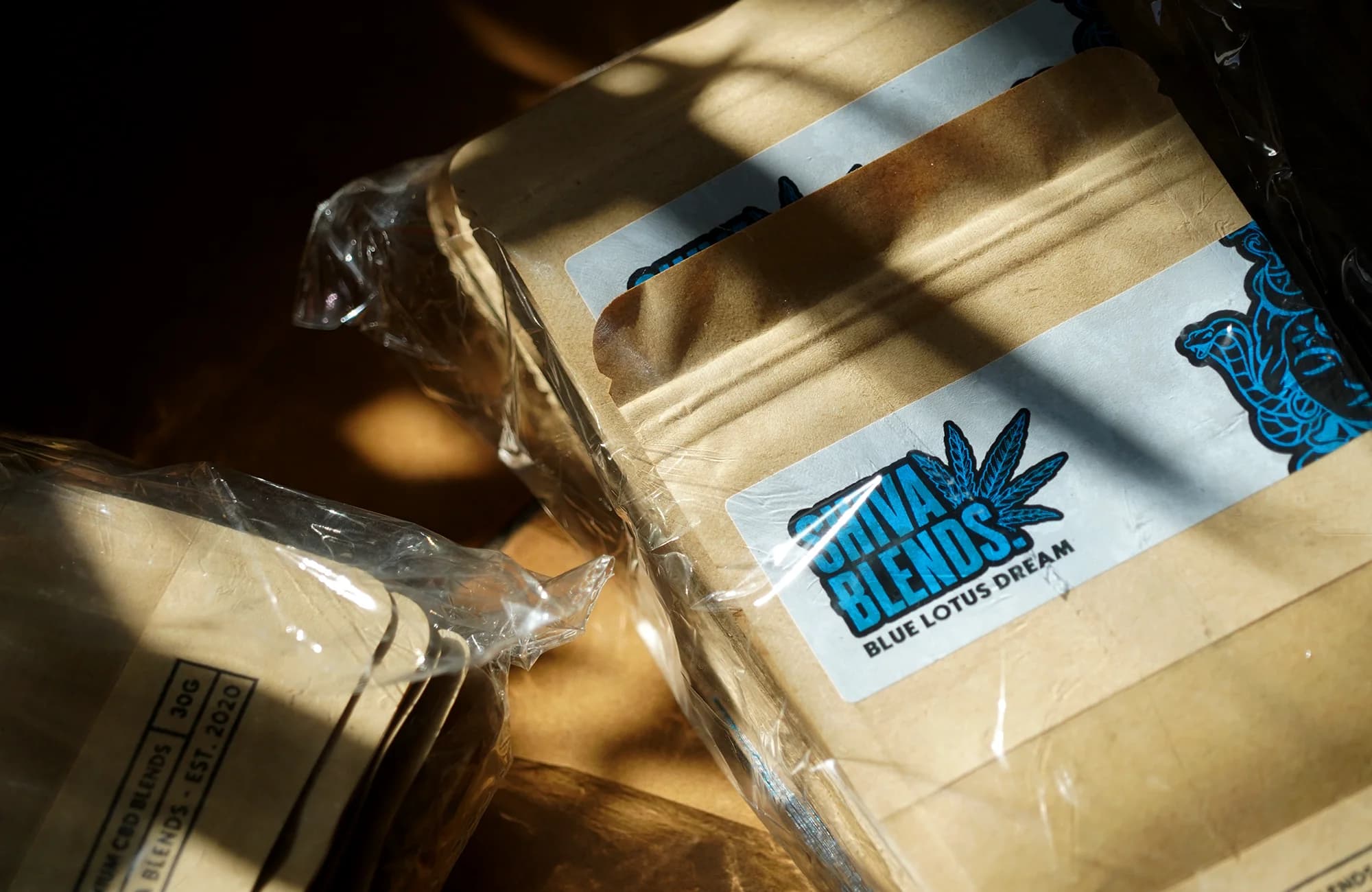
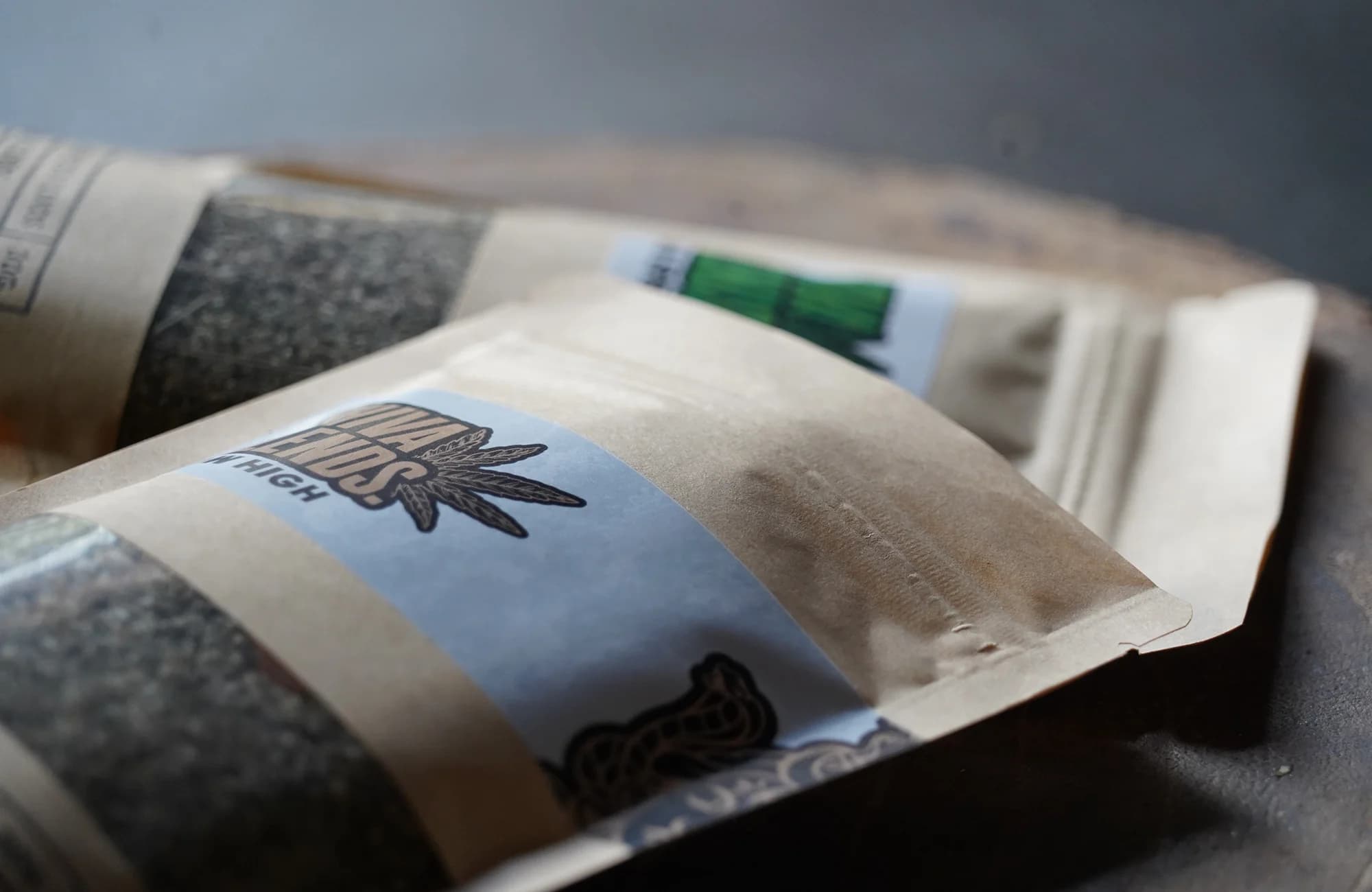
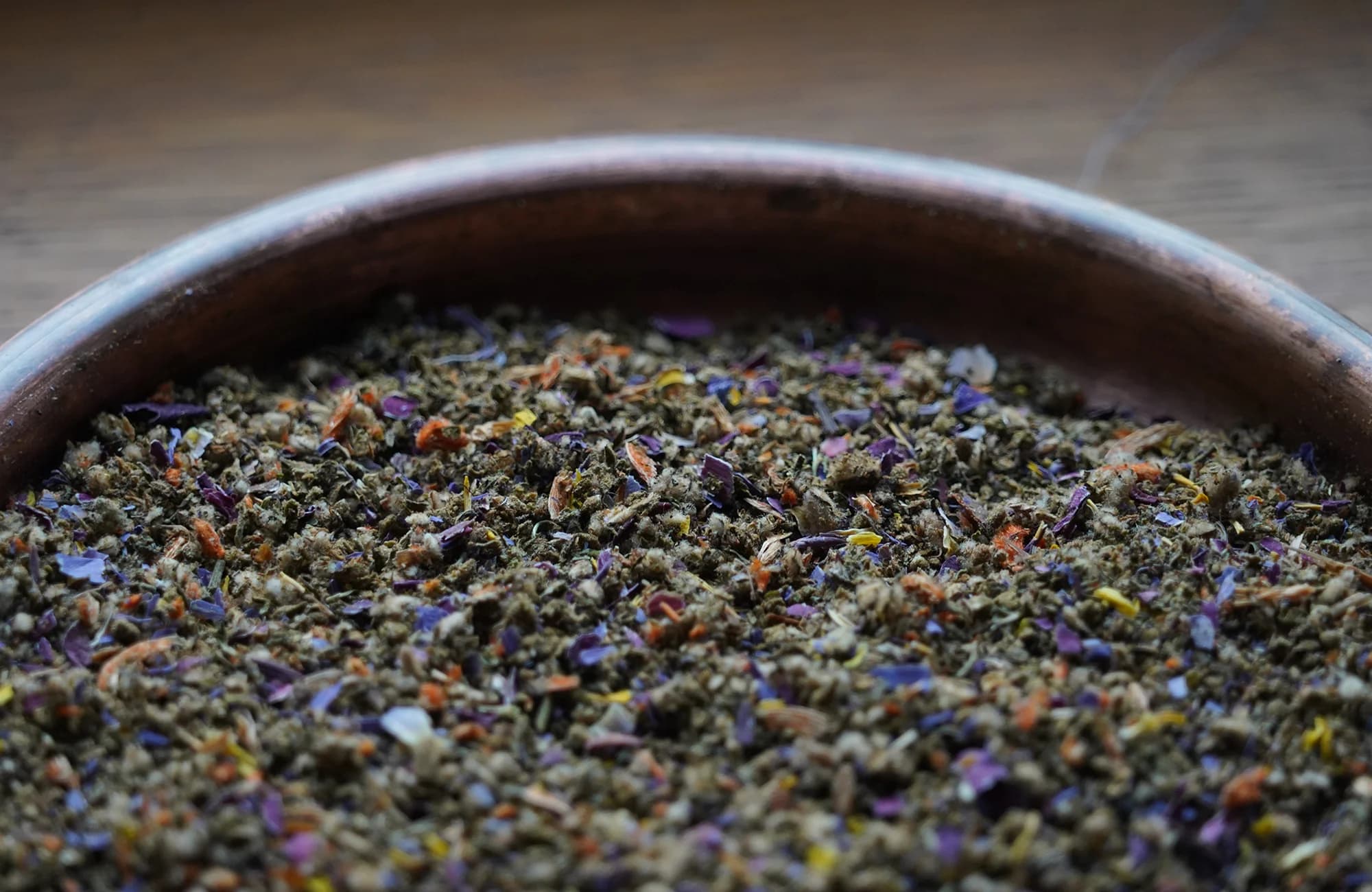
A large part of Shiva Blends happens far away from product photography and website pages. In the workshop, plants arrive in bags and boxes, batches are opened, inspected, compared, sorted and finally blended. This is where recipes become something physical, and where the small details that are invisible once the pouch is sealed begin to matter.
We have always wanted to remain close to this part of the work. A botanical brand that no longer really touches its plants eventually loses something essential. The workshop is therefore our production space, our formulation room and the place where we can directly assess the material we work with.
Small-scale production
Our blends are produced in small batches. This allows us to stay very close to the raw materials and to notice the natural variations that occur from one batch to another.
A plant is not an industrial component that arrives perfectly identical every time. Colour may vary slightly, leaf size may change, one harvest may be more aromatic than another and the proportion of stems or fragments can differ. That variability is part of working with plant material, but it should not prevent a recipe from maintaining its identity.
Our job is therefore to find a balance between the living nature of the raw material and the consistency expected from the finished blend.
Quality starts before the recipe
An excellent formula cannot compensate for poor raw material. Before we even think about proportions, we look at the overall condition of the plants: their appearance, colour, aroma, texture, cut and whether they contain parts we do not want to keep in the final composition.
Some plants require more sorting than others. A delivery may contain stems that are too thick, pieces that are too coarse or fragments that simply do not match the quality we want for a particular recipe. When necessary, the material is sorted again by hand before being used.
It is not the most spectacular part of the process, but it has a direct impact on the finished product. A few extra minutes spent sorting can matter more than an impressive list of claims printed on a label.
Keeping the identity of each blend
A recipe provides proportions and a framework, but working with plants also requires paying attention to what is actually in front of you. If a new batch of damiana is slightly more aromatic, or if the cut changes, the perceived balance of the recipe can shift.
We do not try to erase every natural variation. What we want to preserve is the personality of the recipe. Herbal Haze should remain Herbal Haze, Blue Lotus Dream should keep its own world, and Flower Power should continue to have the character that was originally imagined for it.
That consistency sometimes requires more than a scale and a formulation sheet. Experience, smell, observation and familiarity with the plants all matter.
Proportions before long ingredient lists
We do not believe a blend automatically improves as the ingredient list grows longer. A few carefully chosen plants, balanced properly, can produce a far more coherent recipe than a composition containing a dozen competing ingredients.
Developing a blend therefore often involves removing as much as adding. We test different proportions, compare variations and observe what happens when one plant is shifted slightly within the formula.
A very aromatic ingredient may represent only a small percentage of the blend and still determine much of its identity. Conversely, the plant that provides most of the volume may deliberately remain discreet in order to support everything else.
Traceability and documentation
Working on an artisanal scale does not mean working without structure. Information relating to our raw materials, their origin, suppliers and batches is retained so that we can follow what enters our preparations.
Where relevant and available for the material concerned, we also rely on supplier documentation, certificates and corresponding analyses. Botanical quality matters, but it needs to be supported by serious work around identification and traceability.
This side of Shiva Blends is less visible, and certainly less photogenic than a handful of dried flowers. It is nevertheless essential. The poetry of plants works much better when it rests on a rigorous foundation.
Organic where it makes sense
A large proportion of the plants we use comes from organic agriculture. We favour this approach whenever quality, availability and sourcing allow it.
At the same time, we do not want to reduce the choice of a raw material to the presence of a logo. Certification provides important information, but we also look at the actual quality of the plant, its cleanliness, freshness, aroma and suitability for the recipe.
When strong botanical quality and organic sourcing meet, that is naturally the situation we prefer.
Made in France, in practical terms
Our blends are composed and packed in our workshop in France. For us, that primarily means maintaining direct control over production: receiving the raw materials, following the batches, creating the blends and being able to intervene quickly when something does not meet our expectations.
This proximity to production is something we want to preserve as Shiva Blends grows. Some tasks can and should be streamlined, but we do not want to automate the parts of the process that would distance us from the product itself.
Improving rather than freezing a recipe forever
A recipe does not need to be declared perfect for all time. We prefer to think that it can continue to become more precise as long as its identity remains intact.
A better raw material, a more suitable cut or a very small adjustment can sometimes improve the overall composition. This does not mean changing recipes constantly, but it does mean accepting that a workshop is also a place where learning never really stops.
After several years, some observations become almost instinctive. You notice more quickly when something is missing, when a texture is less satisfying or when one plant has started to dominate a little too much. That kind of knowledge does not fit entirely into a spreadsheet.
What we want to preserve
As a company grows, it becomes easy to turn products into SKUs, plants into stock lines and production into nothing more than a process. Some of that structure is necessary, but we do not want it to erase what made us want to create Shiva Blends in the first place.
Opening a new batch with curiosity, recognising beautiful plant material, testing a different proportion when something catches our attention and genuinely knowing what goes into each pouch are all part of that philosophy.
Our workshop therefore sits somewhere between two worlds: enough method to work seriously, and enough closeness to the plants to prevent the whole process from ever becoming completely mechanical.
To see the rest:
our story · Building a botanical blend · find the blend that suits you